The View from the Bedside
Part II of III - A factual companion to Pray You Have a Professional at Your Bedside
From the rooms where rules of law are written to the rooms where lives are held in balance, every decision makes a difference.
Every word drafted and every line written far from the bedside still lands at the bedside, and the distance between the two is only an illusion.
When decisions made in a conference room reach the patient’s room, policy stops being abstract.
When language becomes structure and structure becomes consequence, The View from the Bedside reflects on how words that may be written into policy shape what care becomes possible, who provides it, and who receives it.
The View follows Pray in purpose and tone, both expanding and defining. Seen through this writer’s personal lens of nursing experience, it examines how federal loan-limit language shapes the work of care within nursing and across the wider care economy. Part research, part story, all heart.
Author’s Note, Context, Who Governs Nursing, Lack of Access, The Ripple Effect for Nursing, The Wider Impact, What Pray Was Really About, In Closing, Afterword, Call to Action: What We Can Do, But Wait - There’s More, Disclaimer, References
Author’s Note
The View from the Bedside is based on language presented in the U.S. Department of Education’s (ED) Reimagining and Improving Student Education (RISE) Negotiated Rulemaking, Discussion Paper and Proposed Regulatory Text: Loan Limit Provisions and Definitions sessions. (1) These sessions examined proposed updates to graduate and professional loan-limit provisions, including a definition of “professional degree” for federal borrowing purposes and an accompanying list of qualifying disciplines.
The list did not include nursing.
This omission carries potential implications for graduate nursing education, workforce sustainability, and the wider care economy. This article presents data and context showing how administrative language and funding decisions influence access to advanced education.
The ED has also issued a Myth vs. Fact: The Definition of Professional Degrees press release (14), outlining how the ED defines “professional degree”, an internal definition for loan-limit purposes, and they clarify it is “not a value judgment about the importance of programs”.
The View builds on Pray You Have a Professional at Your Bedside, which demonstrated how policy language influences both access to funding and professional perception, returning to that same language, no longer as literary device but as documentation, to examine how words in federal regulation become structure, shaping both opportunity and perception within the care professions.
Context
The ED’s proposed regulatory language, discussed during the RISE sessions, outlines which programs would be eligible for higher loan limits, and nursing was not among them.
The omission of nurses from higher loan limits has prompted the American Nurses Association (ANA) to call on the ED to revise the definition to include nursing.
The ANA has issued two formal statements and a petition urging the ED to include nursing in its definition of “professional degree.” (2)(2a)
A link to the petition can be found in the Call to Action section below.
Who Governs Nursing
• American Nurses Association (ANA) — Defines professional standards, ethics, and scope of practice. (3)
• National Council of State Boards of Nursing (NCSBN) — Oversees licensure and NCLEX testing standards. (4)
• State Boards of Nursing — Regulate practice, ensure public safety, and uphold accountability.
Nursing already fulfills the core hallmarks of a profession: an evidence base, ethical code, licensure, continuing education, and accountability.
Lack of Access
The ED’s proposed regulatory language would cap federal loan limits for graduate nursing students because nursing was not included in the definition of professional degrees. (1)
While some claim this could push institutions to lower tuition, history and economic data suggest otherwise. Tuition typically does not decrease when borrowing access is reduced. Instead, the financial barrier shifts to the student. Individuals with greater financial resources can continue, while those with fewer means face additional barriers to advancement.
This effectively limits who can choose nursing at higher levels, restricting advanced education to those who can pay out of pocket or access private loans. It may narrow opportunity without lowering cost.
The issue is not excess; it is access to funding. The result is foreseeable: fewer nurses from working-class and underrepresented backgrounds will be able to pursue advanced practice, research, or leadership roles. Fewer teachers to train the next generation. Fewer clinicians to care for underserved communities.
Limiting access to federal funding for advanced education in the caring professions does not strengthen the system. It constrains it.
The loan limits also disproportionately affect nontraditional and second-career nurses, those who return to school after years in the workforce, often already carrying prior education debt, yet seeking to advance into leadership and advanced practice roles.
At first glance, the $100,000 aggregate (lifetime) loan cap for graduate nursing degrees might appear reasonable. Several datasets are being referenced in current discussions about the graduate loan limits, including both federal sources like the College Scorecard (CS) and profession specific surveys such as those conducted by the American Association of Colleges of Nursing (AACN). Both sets of figures report median student debt, a midpoint rather than a range, but the difference lies in scope and context.
Federal figures drawn from the ED’s CS report median federal loan debt and earnings for graduates by field of study. The CS includes only federal loans, excludes private loans, and does not distinguish tuition from other education-related expenses. These medians offer a narrow, dated view, typically two or three years old, capturing early-career outcomes across all disciplines rather than current realities within the profession. In contrast, the AACN data arise from within nursing education itself, and reports program-level anticipated debt in nursing, does not break out federal versus private borrowing, and does not distinguish tuition from other education-related expenses. However, the most recent AACN report, published in 2023 and based on 2016 survey data, is also dated and likely underestimates current borrowing needs once modern tuition, living costs, and inflation are taken into account. Both datasets, while useful for broad comparison, obscure the full range of actual borrowing burdens faced by graduate nursing students.
Median debt reported by AACN shows anticipated borrowing upon completion ranging between $40,000 and $54,999. (5) The $100,000 lifetime cap loses perspective once real-world borrowing patterns and the erosion of value over time are considered. Additionally, median debt captures only a midpoint, not the upper limits that many borrowers face and that distinction matters.
The truth is, no one actually knows the current cost of becoming an advanced practice nurse. The data that should inform these decisions are outdated, incomplete, and disconnected from today’s reality. Behind every median is a range of real people whose costs and sacrifices exceed the statistic, a truth that policy cannot afford to overlook.
Nationally, Americans now owe roughly $1.6 trillion in student loans, a 42 percent increase over the past decade according to the Pew Research Center (PRC). (6) PRC also reports that debt levels vary widely by education level, with advanced-degree holders typically carrying the largest balances. As inflation and tuition rise, even a cap that looks adequate quickly becomes restrictive.
According to the federal National Sample Survey of Registered Nurses (NSSRN), based on data from 2022, approximately 45% of RNs used federally assisted student loans to finance their initial nursing education, and about 51% borrowed funds for either their initial or an additional nursing degree, (7) confirming that nursing education depends substantially on access to federal lending. Excluding nursing from a professional-degree classification and access to higher federal funding would push many future nurses toward private loans or self-payment. For those already carrying undergraduate or prior-career debt, it often means an impossible choice between withdrawing, assuming higher-interest private loans, or abandoning advancement altogether.
It is also telling who stands behind nurses in this moment. The very organizations whose data often inform public discussion of nursing education costs, such as the AACN, are among those who support the ANA petition, alongside the NCSBN, the American Association of Nurse Practitioners (AANP), and more than twenty other national specialty organizations. Their inclusion signals alignment with the ANA’s position that excluding nursing from the professional degree classification is a policy oversight with serious workforce implications. So while some may point to AACN’s debt data as context for how much nurses borrow, AACN itself, through its support in this coalition, has made clear that nursing should have been explicitly included.
The unity across academic, regulatory, and professional nursing leadership makes one point unmistakable. This is not an argument about numbers. It is about what kind of access a nation chooses to grant to the people who keep its health systems running.
And nursing is not alone.
The omission affects other care-centered and service-based professions that have long been undervalued, social work, education, counseling, and public health.
These are the fields that hold communities together, often staffed by people from underrepresented backgrounds, and they are also being told, through policy, that their expertise is less worthy of investment.
When graduate programs for these groups are also left out of professional classifications, the message echoes through hospitals, clinics, classrooms, and communities.
It implies that the work of care is somehow less deserving of investment or opportunity for advancement.
This is not just a nursing issue.
It is a care economy issue.
If we limit the ability of every degree built around caring and service to grow, we erode the care infrastructure that holds our communities together.
The Ripple Effect for Nursing
If adopted, this omission would be a structural decision with far-reaching consequences. It would affect Advanced Practice Registered Nurses (APRNs), Nurse Practitioners (NPs), Clinical Nurse Specialists (CNSs), Nurse Anesthetists (CRNAs), and Nurse Midwives (CNMs), all of whom require graduate or doctoral education to practice fully.
It would also affect MSN-, DNP-, and PhD-prepared nurses, the very educators and researchers responsible for educating the next generation. Without equitable funding for advanced education, who will teach the next generation?
The message this omission sends to the public is equally troubling.
When policy separates professional from non-professional, it risks shaping perception, and perception drives trust.
Will patients come to believe that nurse-led care is somehow less professional than physician-led care?
That kind of erosion starts quietly, through language and legislation, before it ever shows up at the bedside.
And when the language that shapes policy diminishes a profession, it adds weight to a system already strained by burnout and moral injury. The result is not abstract. It is another layer of depletion in a workforce already operating under sustained pressure.
Nurse attrition is not hypothetical.
Up to one-third of newly licensed registered nurses leave the profession within their first two years of practice. (8)
During the pandemic and its aftermath, approximately 138,000 nurses exited the workforce, and nearly 40% report they intend to leave or retire by 2029. (9)
In addition, more than 60% of nurses report symptoms of burnout, citing chronic understaffing, moral injury, and emotional exhaustion as key reasons for considering departure. (10)
Attrition further weakens an already overextended system, one that could deteriorate even more if current administrative definitions move forward unchanged. With the population aging and what researchers colloquially call the “silver tsunami” now unfolding, the need for care will only intensify.
The Wider Impact
Based on data from the Bureau of Labor Statistics (BLS) nurses make up the largest category of healthcare providers in the American healthcare system, totaling approximately 4.4 million.
According to the BLS (2024), the U.S. nursing workforce includes approximately 3,391,000 registered nurses (RNs), (11) 651,400 licensed practical and licensed vocational nurses (LPNs/LVNs), (11a), and 382,700 advanced practice registered nurses (APRNs), (11b) including nurse practitioners, nurse anesthetists, and nurse midwives.
Employment of RNs is projected to grow 5%, (11), LPNs/LVNs by 3%, (11a) and APRNs by a striking 40%, (11b) (11c) from 2024 to 2034, underscoring a rapidly expanding need for highly educated nursing professionals. While all projections carry a margin of uncertainty, the direction of growth remains clear and significant. This dramatic projected growth reflects BLS modeling based on an aging population, rising chronic illness, and worsening provider shortages, clear indicators of the nation’s dependence on an adequately educated and supported nursing workforce. (12)(12a)
The BLS statistics and projections are not partisan; they are a mirror that reflects the truth of our nation’s need for nurses. If we meet that truth with both compassion and competence, not policy alone, we might just build a healthcare system that can finally hold us all. If policies built on the ED’s loan-limit language discussed in the RISE sessions inadvertently sideline the nation’s largest body of caregivers under the banner of fiscal reform, they risk the stability of healthcare itself.
Some have argued, this policy affects only a small fraction of nurses.
But even a small percentage of a workforce this large is no small matter.
These are not marginal numbers. They are the backbone of the nation’s clinical education, leadership, and advanced care capacity.
And this doesn’t end with nursing.
Nonphysician providers that include both nurse practitioners and physician assistants now deliver roughly a quarter of all U.S. healthcare visits. (13)(13a) Physician assistants, like nurses, are also not included in the ED’s definition of a professional degree, despite their comparable graduate-level entry requirements. This exclusion means both professions, core to expanding access to primary and specialty care, would be restricted from the higher federal loan limits available to other advanced clinical fields.
This impact is not minimal.
It is systemic.
And every person who serves within the care economy deserves to be seen, supported, and valued accordingly.
What Pray Was Really About
Pray You Have a Professional at Your Bedside wasn’t about semantics, or was it?
Economics and language feed each other, one shaping the other in an endless loop.
Like the ouroboros, the argument turns back on itself, a system feeding on its own language while insisting it’s only about economics.
When policy defines who is “professional,” it’s both a financial and a linguistic act.
Language shapes perception, and perception drives policy. Each reinforces the other, a feedback loop that decides who gets funded, who gets to advance, and who remains on the margins.
The heart of Pray was rooted in my own experience as a nurse, the commitment and the continual work of advancing while giving care within systems that are often understaffed and overextended.
In combining both policy language and lived experience, the telling of the tale got tangled up in the prose. I intentionally left off “degree” to highlight the ambiguity of language and how a single word can define access in policy yet reflect integrity in practice. The omission was purposeful, a way to show how meaning itself can shape perception, and the responses that followed reminded me just how powerful language can be. The View from the Bedside was born the same day Pray was posted and unfolded over the ten days that followed, written between inpatient shifts through the holiday.
I know that what I write carries interpretation, my opinion, but it is informed in fact, research, and lived reality.
I try to be responsible with that balance.
For those of us who live inside these systems, the line between economic policy and human consequence is not theoretical; it is raw, everyday experience.
It is recognition.
And the impact is real. It is the nurse studying to advance their practice between back-to-back shifts, reviewing index cards in the car or grocery line because you’re never really done learning. It is schools forced to turn away qualified students for lack of faculty. And it is the patients waiting for beds because of a lack of staff.
It is knowing the system is already strained, and that decisions like this one deepen the fracture lines. Ultimately, those fractures reach the bedside, affecting patient care and safety.
In Closing
I write because facts alone rarely move hearts.
Data tells us what is happening. Words remind us why it matters.
This moment isn’t only about policy.
It’s about what we value, who we choose to invest in, and what kind of care system we believe in.
Everything I have written here comes not from certainty, but from concern. I truly hope I am wrong about what this proposal could mean. Nothing would bring me greater relief than to see nursing and every other care profession fully recognized and supported.
We choose nursing because it is rooted in care, in presence, in humanity, in the kind of healing that asks for more than science alone. To limit how far that calling can grow is to misunderstand what nursing is made of.
Afterword
On November 24, 2025, the ED released Myth vs. Fact: The Definition of Professional Degrees, in which the ED addressed public concern over the new classification of professional degrees and federal loan limits. (14)
To treat language as merely administrative and “not a value judgment” is to disregard its potential cascading impact across the workforce. Language shapes legitimacy, and policy determines who has financial access to progress through graduate study. Nurses deserve neither semantic downgrades nor financial ceilings disguised as neutrality.
Even if the ED’s intent was purely administrative, impact and perception are inseparable. Bureaucratic neutrality does not erase the message received on the ground.
The logic may hold that nurses were never professional by definition, but the optics tell another story. During the pandemic, a nation that once called us “heroes” (15) and “professionals” (16) and told us they would never forget how we showed up, now calls us something less. For those who did show up in our nation’s time of need, the shift is not simply bureaucratic.
And whatever happened to “we are all in this together”? (15) It seems words are conveniently used when needed and disposed of when they no longer serve.
To all who have carried the work of care, nurses, social workers, teachers, counselors, therapists, public health professionals, and countless others who show up when needed this moment includes all of us. None of us have forgotten. May the nation remember as well.
Nurses will continue to show up, as they always have, but they do not stand alone. Every profession rooted in service carries the same fatigue, the same devotion, and the same quiet question echoing beneath the noise: what becomes of a country that depends on care yet hesitates to value it?
We start by refusing silence. We start by naming what has been minimized.
We start by taking action together.
Call to Action: What We Can Do
This isn’t just about awareness, it’s about agency.
And anyone can take action in shaping policy that affects the future of care.
1. Sign the American Nurses Association Petition
The American Nurses Association (ANA) has formally petitioned the Department of Education to include nursing in the list of professional degrees eligible for higher loan limits.
Add your name in solidarity with nurses nationwide who are calling for equitable access to federal graduate lending. Sign the petition and support funding for higher education for nurses.
→ ANA Nursing IS a Professional Degree: Petition to the U.S. Department of Education
2. Contact Your Representatives in Congress
Write, call, or email your representatives and senators.
Tell them the loan and degree policy decisions affect not only nurses, but also social workers, teachers, therapists, and public health professionals, the backbone of our care system.
Ask them to advocate for equitable loan access for all caregiving professions.
→ Find your House member: https://www.house.gov/representatives/find-your-representative
→ Contact your Senators: https://www.senate.gov/senators/senators-contact.htm
But Wait - There’s More
Because beyond the data and debate, care starts with the self, in the body, the breath, and the steady work of becoming whole again, not as the absence of illness or pain but the presence of balance and well-being.
In that remembering, in knowing what it means to belong to our own wholeness, prevention, connection, and presence become the real practice of healing.
It grows from the self, flows through what we do, and extends outward into community, nature, and the wider world.
In the end, we are all in this together, learning how to care for one another and for the world that holds us.
Part III of III - An integrative companion to Pray and The View, But Wait - There’s More, to be continued.
Disclaimer
The views expressed here are my own and do not represent any organization, institution or employer.
Beth Pearson King, BSN, RN
References
U.S. Department of Education. (2025, September 29 – October 3). Reimagining and Improving Student Education (RISE) Negotiated Rulemaking: Discussion Paper and Proposed Regulatory Text — Loan Limit Provisions and Definitions, Session 1. https://www.ed.gov/media/document/rise-discussion-paper-loan-limits-685102-685200-685201-685203-september-29-pm-version-112442.pdf
American Nurses Association. (2025, November 10). Statement on Proposed Federal Loan Policy Changes. https://www.nursingworld.org/news/news-releases/2025/statement-from-the-american-nurses-association-on-proposed-federal-loan-policy-changes/ (2a.) American Nurses Association.(2025, November 26). Department of Education’s Loan Proposal Puts Nursing Workforce and Patient Care at Risk. https://www.nursingworld.org/news/news-releases/2025/department-of-educations-loan-proposal-puts-nursing-workforce-and-patient-care-at-risk/
American Nurses Association. Nursing Scope and Standards of Practice. https://www.nursingworld.org/practice-policy/scope-of-practice/
National Council of State Boards of Nursing. Nursing Regulation. https://www.ncsbn.org/nursing-regulation.page
American Association of Colleges of Nursing (AACN). (2023). Student Debt Report. https://www.aacnnursing.org/Portals/42/Policy/PDF/Debt_Report.pdf
Pew Research Center. (2024, September 18). 5 Facts About Student Loans. https://www.pewresearch.org/short-reads/2024/09/18/facts-about-student-loans/
Health Resources and Services Administration (HRSA). (2022). National Sample Survey of Registered Nurses: Education and Training Report. https://bhw.hrsa.gov/sites/default/files/bureau-health-workforce/data-research/nssrn-education-training-report.pdf
Tate, S. (2024). Registered Nurses Leaving the Profession in the First Two Years. OJIN: The Online Journal of Issues in Nursing, 29(2). https://ojin.nursingworld.org/table-of-contents/volume-29-2024/number-2-may-2024/registered-nursing-leaving-the-profession
National Council of State Boards of Nursing (NCSBN). (2024). 2024 National Nursing Workforce Study. https://www.ncsbn.org/news/ncsbn-research-highlights-small-steps-toward-nursing-workforce-recovery-burnout-and-staffing-challenges-persist
American Nurses Association (ANA). (2024). Workplace Well-Being Report: What Is Nurse Burnout and How to Prevent It. https://www.nursingworld.org/content-hub/resources/workplace/what-is-nurse-burnout-how-to-prevent-it
Bureau of Labor Statistics. (2025). Occupational Outlook Handbook: Registered Nurses. https://www.bls.gov/ooh/healthcare/registered-nurses.htm (11a.) Bureau of Labor Statistics. (2025). Occupational Outlook Handbook: Licensed Practical and Licensed Vocational Nurses. https://www.bls.gov/ooh/healthcare/licensed-practical-and-licensed-vocational-nurses.htm (11b.) Bureau of Labor Statistics. (2025). Occupational Outlook Handbook: Nurse Anesthetists, Nurse Midwives, and Nurse Practitioners. https://www.bls.gov/ooh/healthcare/nurse-anesthetists-nurse-midwives-and-nurse-practitioners.htm (11c.) Bureau of Labor Statistics. (2025). Occupational Outlook Handbook: Fastest Growing Occupations, 2024–34. https://www.bls.gov/ooh/fastest-growing.htm
Bureau of Labor Statistics. (2025, August 28). Employment Projections — 2024–2034. https://www.bls.gov/news.release/pdf/ecopro.pdf (12a.) Bureau of Labor Statistics. (2025). Employment Projections Methods Overview. https://www.bls.gov/emp/documentation/projections-methods.htm
Harvard Medicine News. (2023, September 14). A Fourth of U.S. Health Visits Now Delivered by Non-Physicians.https://hms.harvard.edu/news/fourth-us-health-visits-now-delivered-non-physicians (13a.) Patel, S. Y., Auerbach, D., Huskamp, H. A., Frakt, A., Neprash, H., Barnett, M. L., Smith, L. B., & Mehrotra, A. (2023). Provision of evaluation and management visits by nurse practitioners and physician assistants in the USA from 2013 to 2019: cross-sectional time-series study. BMJ, 382:e073933. https://www.bmj.com/content/382/bmj-2022-073933
U.S. Department of Education. (2025, November 24). Myth vs. Fact: The Definition of Professional Degrees. https://www.ed.gov/about/news/press-release/myth-vs-fact-definition-of-professional-degrees
Trump, D. J. (2020, March 18). Remarks by President Trump, Vice President Pence, and Members of the Coronavirus Task Force in Press Briefing. The White House Archives. https://trumpwhitehouse.archives.gov/briefings-statements/remarks-president-trump-vice-president-pence-members-coronavirus-task-force-press-briefing-5/
Trump, D. J. (2020, May 6). Remarks by President Trump at Signing of a Proclamation in Honor of National Nurses Day. The White House Archives. https://trumpwhitehouse.archives.gov/briefings-statements/remarks-president-trump-signing-proclamation-honor-national-nurses-day/
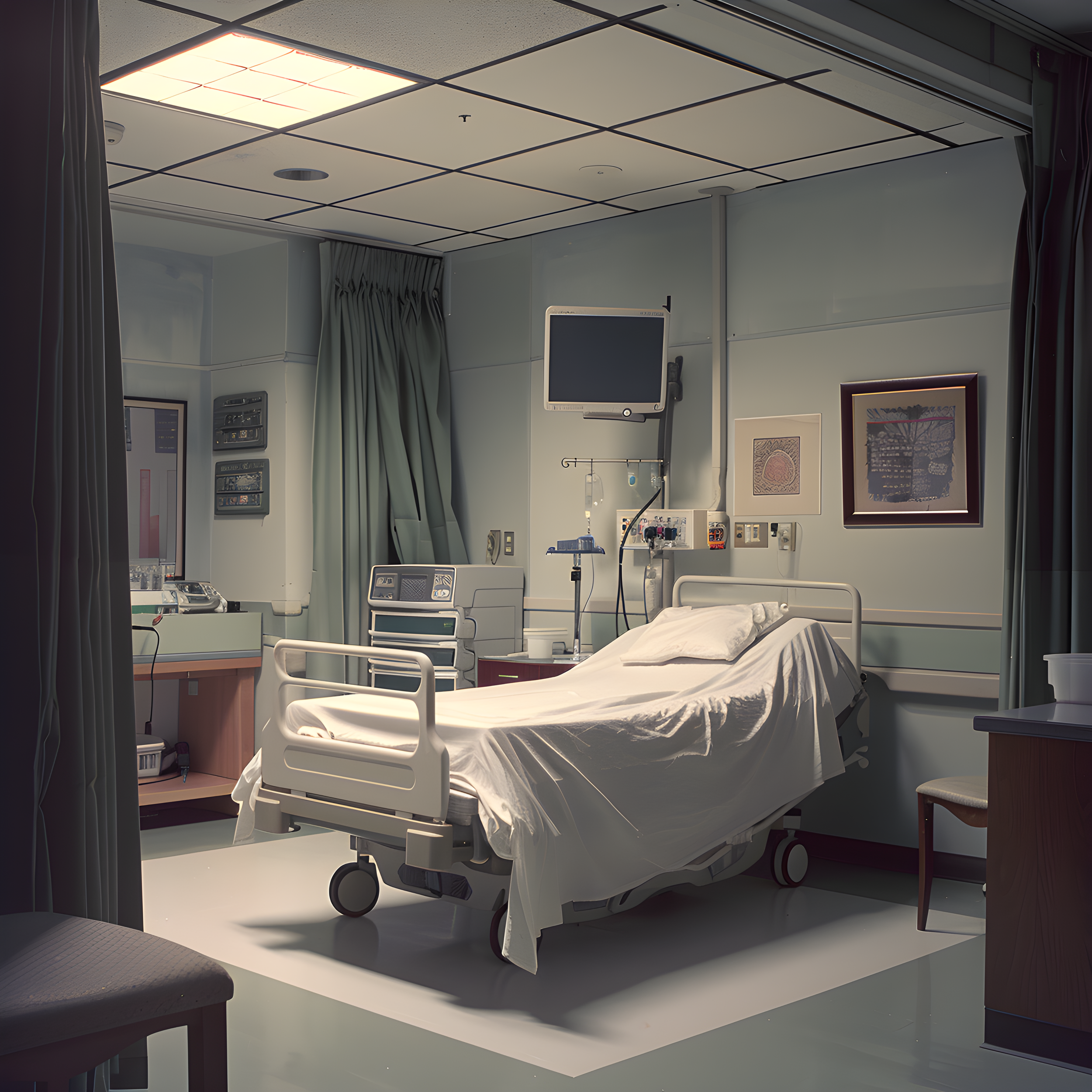
Photograph: Only emptiness without the presence, compassion, and care of a nurse. (Stock photo)